
C1.0 High-Sensitivity Chemistry System

Breakthrough to the Picogram Level: Liberating Nanopore Sequencing from Trace Sample Limitations
In clinical and research settings, critical samples such as single-cell cDNA and nucleic acids from assisted reproductive technologies often fall far below the input requirements of traditional nanopore sequencing. While amplification-based library preparation can increase sample quantity, it often leads to uneven genome coverage and reduced accuracy in variant detection—undermining the inherent advantages of nanopore technology. The C1.0 High-Sensitivity Chemistry System introduces an innovative substrate enrichment technology that significantly enhances nucleic acid translocation efficiency per unit time, enabling sequencing with ultralow input as little as picogram levels!

Contact us

30x Improvement in Nucleic Acid Capture Efficiency

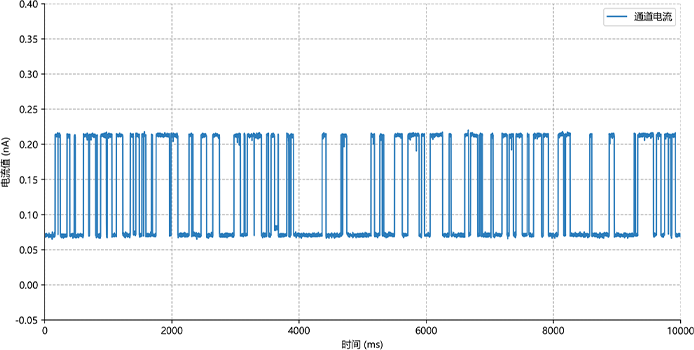
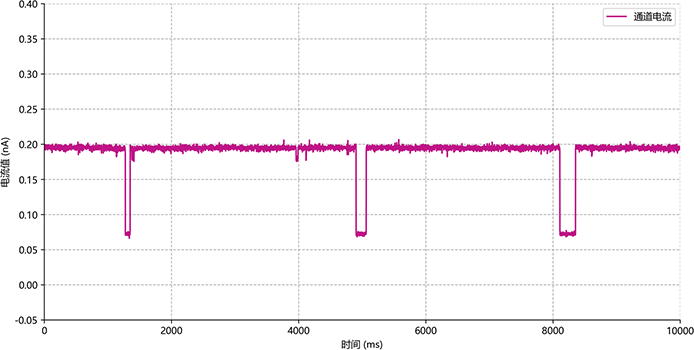
Using the translocation behavior of thrombin-binding aptamer (TBA) sequences through nanopores to evaluate pore protein capture efficiency—defined as the number of detectable signal molecules captured by the nanopore protein per unit time without any enrichment—the new NV2 pore protein demonstrates a 30-fold increase in nucleic acid capture efficiency.

0
times

30-fold lmprovement in Nucleic Acid Capture Efficiency
Ideal Data Yield with Just 5 ng

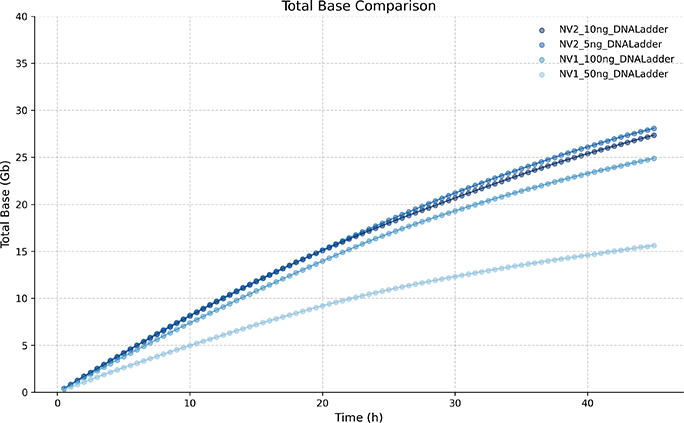
Library construction using DNALadder standards (75 bp–20 kb, SM1332) and sequencing across different input gradients show that a 5 ng input approaches saturation, yielding 33 GB of data over 60 hours.

5ng

Sample Input Amount

33G

60h

Minimum Input Breakthrough to the Picogram Level

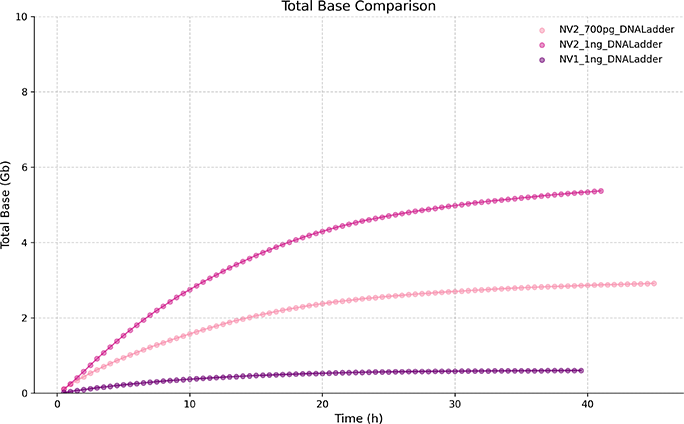
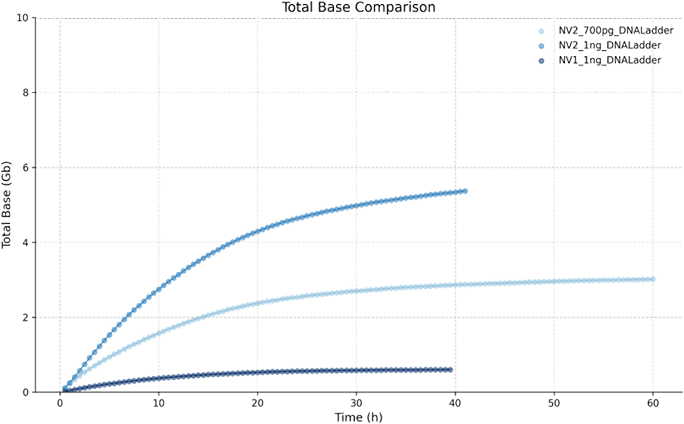
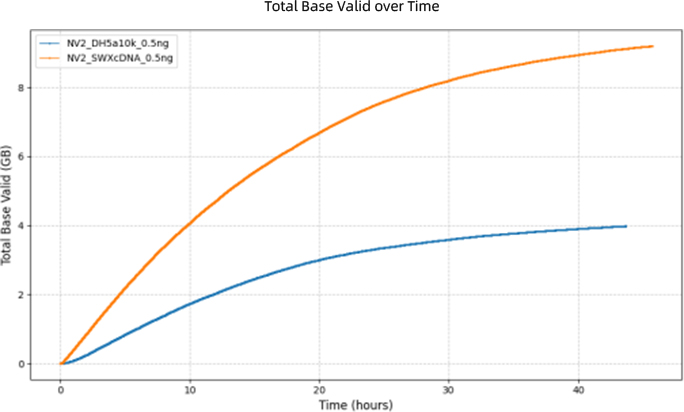
Testing libraries constructed from DNALadder, DH5α, and single-cell transcriptome samples at picogram-scale inputs demonstrates that 500 pg input generates 5–10 GB of data within 40–60 hours—with potential for even lower inputs.

500pg

Sample Input Amount

5-10G

40-60h

For most sample libraries, only 15–50 ng is needed to achieve ideal data output. The system further pushes the boundary to picogram levels, supporting library preparation from as little as 1 ng or even lower starting amounts, dramatically expanding the possibilities for ultratrace sample research.

Contact Us

Please fill in the information below, and we will get in touch with you as soon as possible!

x
Our use of cookies
We would like to use necessary cookies to improve your browsing experience and the quality of our website. We would also like to set analytics cookies and advertisement cookies that help us make improvements by measuring how you use our website. Detailed information about the use of cookies on this website and how you can control your consent can be found in our Cookie Policy and Privacy Policy.
Accept only strictly necessary cookies Accept all cookies